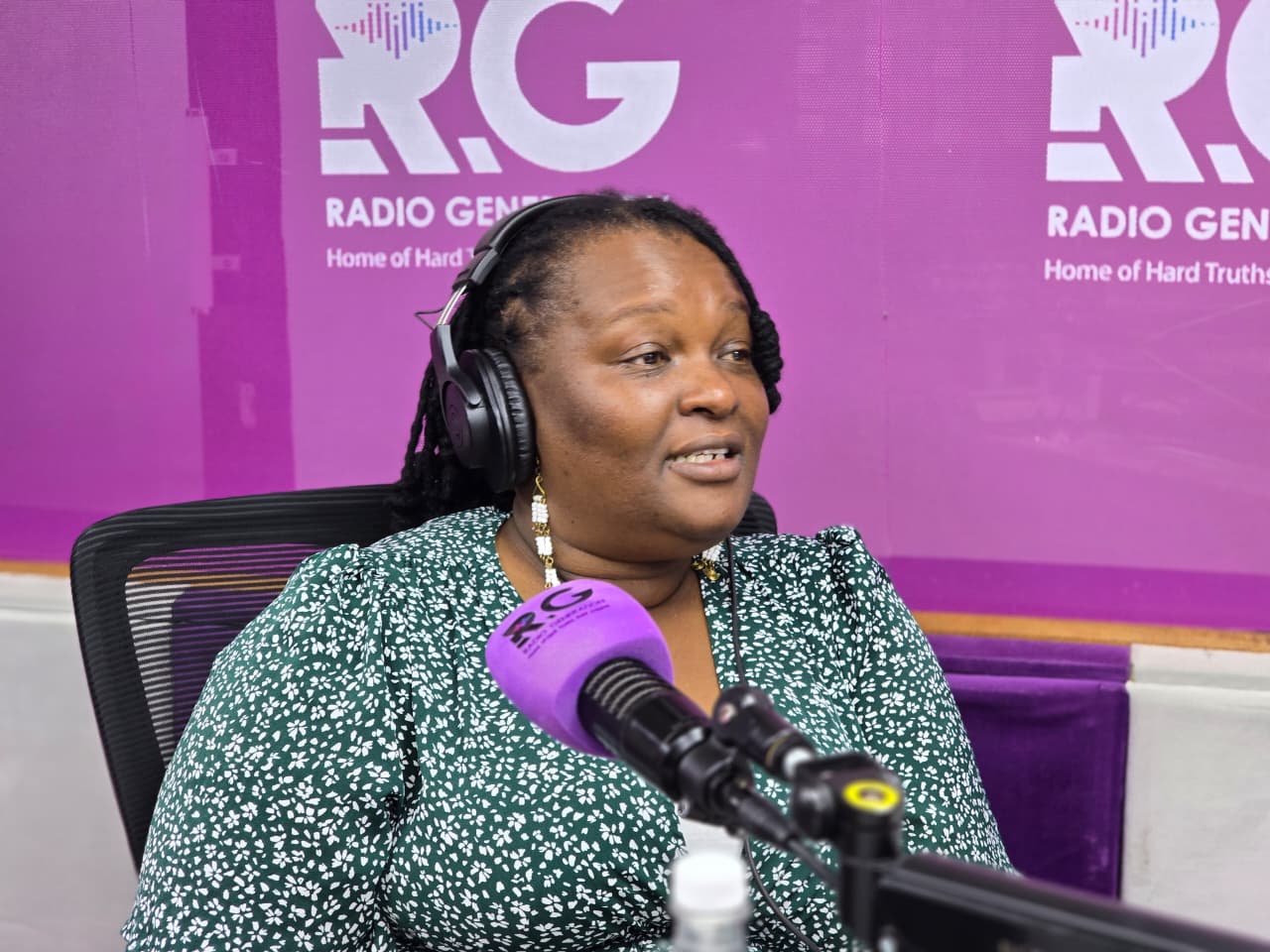
Anne Muchoki, Head of Kitengela International Schools, has raised concerns that Kenya’s Competency-Based Curriculum (CBC) could deepen inequality, leaving public school students with fewer opportunities to explore creative subjects.
Speaking on Radio Generation, Muchoki said many public schools may not have the resources to offer all learning tracks, forcing students to choose only two instead of three.
“A lot are going to do STEM and science. It is okay. We do need the scientists to tell us how to lead, the social sciences to fight for us but we need the creatives to actually live,” she said.
Muchoki highlighted the critical role of creativity during the COVID-19 pandemic, noting that while scientists helped society survive, creatives helped people cope mentally.
“The scientists got us through it alive. The creatives got us through it mentally, made it bearable—the music, the arts that came up during that time,” she said.
She warned that under the CBC, creative subjects risk being concentrated in private schools, accessible mainly to wealthier families, while public school students may be left with limited options.
The school head also criticized Kenya’s highly structured education system for stifling creativity from an early age. “It’s like we regiment children from the beginning, which in itself is the antithesis of creativity. We put them in uniform, same hairstyle, same class, basically move them from block to block in a regimented military way where thought is not encouraged,” Muchoki said.
She explained that students are often taught to produce compositions or perform tasks in a strict, linear way, leaving little room for individual expression.
She described classrooms and activities as “boxes” that contain creativity rather than nurture it. “Have you watched music festivals? there is a certain way you have to say the poem. There’s even creativity regiment. We make it very linear…we are producing children in a factory. Same children, same uniform, same hair,” she said, pointing out the contradiction of celebrating creativity only when students manage to break out of the rigid system.
Muchoki added that the current approach risks producing a generation skilled in theory but limited in imagination. She called on policymakers to rethink CBC implementation to ensure that all students, regardless of socio-economic background, have equal access to both STEM and creative subjects, preserving creativity as an essential part of Kenya’s education system.




























Comments
Sign in with Google to comment, reply, and like comments.
Continue with Google